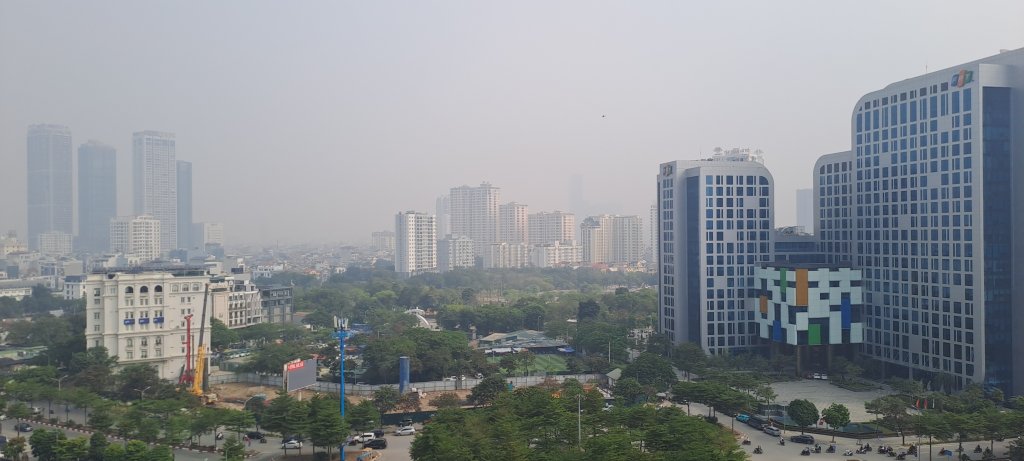
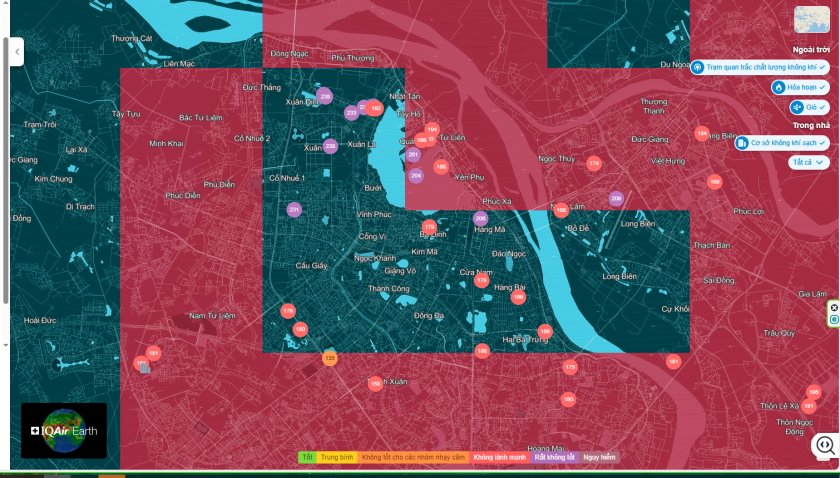
Do sương mù thôi, AQI bị nhầm cái này. Đó là lý do tại sao HN lại có những ngày rất trong lành, khi hoạt động giao thông và xây dựng không đổi. Nó phụ thuộc vào độ ẩm.
How can you tell the difference between air pollution and fog?
Short answer: fog is suspended water droplets and behaves like weather (high humidity, visibility improves rapidly in sunlight/wind, has a damp smell), while air pollution is airborne particles and gases (black/gray or brown haze, chemical odors, uneven spatial patterns, persists in sun and wind, shows specific health effects). Distinguish using simple sensory checks, immediate measurements, and context clues below.
Visual and sensory cues
- Color and appearance:
- Fog: uniformly white to light gray, looks like a cloud at ground level; edges diffuse.
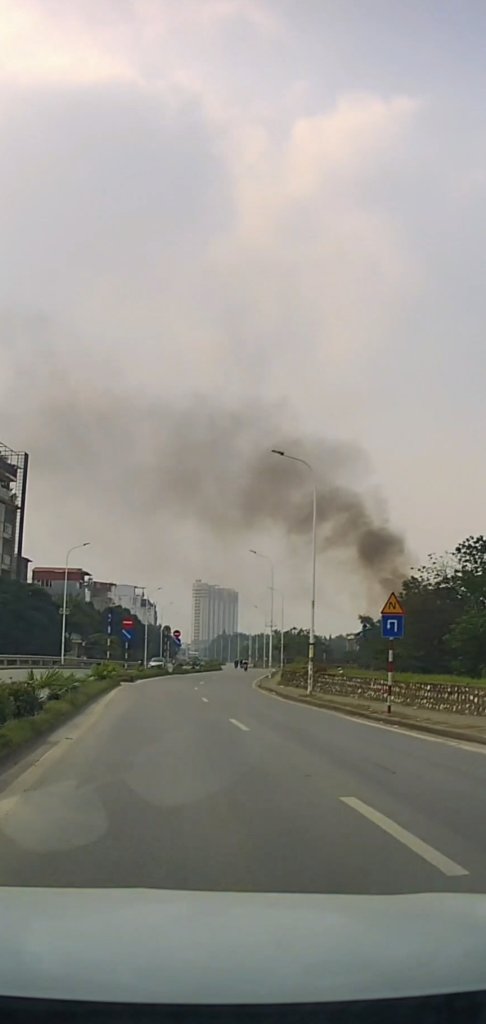
- Pollution (smog/haze): brownish, yellowish, or gray; often layered or patchy; can have darker streaks near traffic or industrial sources.
- Odor and irritation:
- Fog: usually smells faintly of damp earth or is nearly odorless; it does not cause strong eye, nose, or throat irritation.
- Pollution: frequently has chemical, petrol, sulfur, or smoky smells and causes burning eyes, sore throat, coughing or wheezing.
- Touch and surface effects:
- Fog: leaves visible moisture (wet car surfaces, droplets on hair/clothes, beads on grass).
- Pollution: leaves little or no water; fine particulate may leave a thin sooty film on surfaces over hours/days.
- Behavior in sunlight and wind:
- Fog: lifts, thins or dissipates quickly with sunlight and modest wind as the air warms and dries.
- Pollution: can persist or even worsen in sunlight (photochemical smog) and may not clear quickly with light wind; wind changes distribution rather than eliminate it.
- Time of day and weather context:
- Fog: common at dawn/dusk, after clear nights with radiational cooling, near water bodies, and when relative humidity is near 100%.
- Pollution: common during temperature inversions, in dense urban/industrial areas, and can peak during rush hours; may occur anytime but often worse on still, cold days with inversion.
Simple measurements and tests
- Humidity check: relative humidity near 100% strongly suggests fog; portable hygrometers or many smartphone weather apps can show RH quickly.
- Visibility and distance test: fog reduces visibility uniformly across distances; pollution often reduces visibility unevenly and you may see clearer pockets.
- Paper/cloth moisture test: hold a clean white tissue outside for a minute. If it becomes visibly wet from droplets, that indicates fog/mist; if it becomes slightly soiled or dusty but not wet, particles suggest pollution.
- Smudge test on a white surface: leave a white plate or paper out for a few hours. Dark dust/soot deposits indicate particulate pollution.
- Low-cost sensors and apps:
- PM2.5/PM10 sensors: high PM readings indicate particulate pollution; fog itself does not raise PM chemically but very high humidity can bias some optical PM sensors upward (aware interpretation required).
- AQI (air quality index) from local/environmental agencies or apps: an elevated AQI (unhealthy) points to pollution rather than ordinary fog.
- Visibility sensors and webcam comparisons: local webcams and visibility reports can confirm fog presence.
When readings conflict
- High RH (~100%) + wet surfaces + low AQI: fog.
- Elevated PM2.5/PM10 or AQI + odors/irritation + dry surfaces: pollution.
- High RH + high PM sensor reading: likely fog/mist causing optical sensor over-reading; check gravimetric sampler or wait for drier air or use a humidity-corrected sensor.
Health and safety implications
- Fog: generally low chemical hazard but reduces driving visibility—use low-beam headlights and slow speed.
- Pollution: can harm lungs and heart—limit outdoor exertion, use certified masks (N95/FFP2) when PM is high, and follow local advisories.
Examples (typical scenarios)
- Coastal morning with dew on grass, uniform white mist, RH near 100%: fog.
- Cold city morning with brownish layer, cars leaving dark trails, scratchy eyes, high PM2.5 and elevated AQI: pollution/smog.
- Sunny afternoon haze that worsens during midday in a sunny city with a photochemical brown layer: photochemical smog (pollution), not fog.
Practical checklist to decide quickly
- Look: white/diffuse (fog) vs brown/patchy (pollution).
- Smell/feel: wet/no irritation (fog) vs chemical/irritation (pollution).
- Check humidity/AQI/PM sensor or weather app.
- Inspect surfaces for moisture vs soot.
- Observe persistence with sun/wind: clears fast (fog) vs persistent/worsens (pollution).
Use objective measurements (RH and PM/AQI) when available; when uncertain, treat it as pollution for health precautions.










 .
.


